
Programme overview
Learn to fly safely, legally and with confidence.
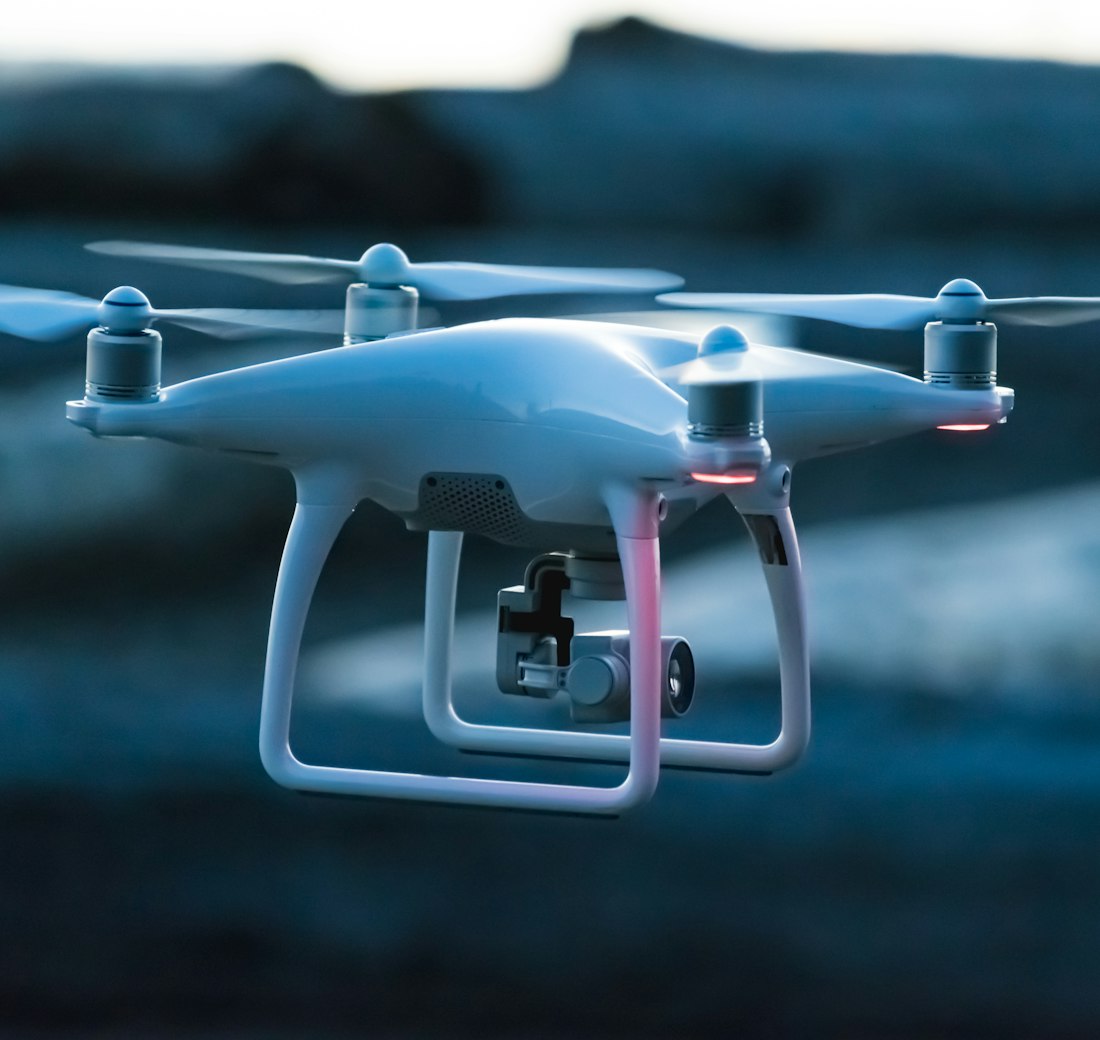
The Drone Pilot programme takes participants from zero stick-time to controlled, regulation-aware flight. It blends ground school, simulator practice and supervised field sessions so trainees understand not only how to fly, but when, where and how to fly responsibly.
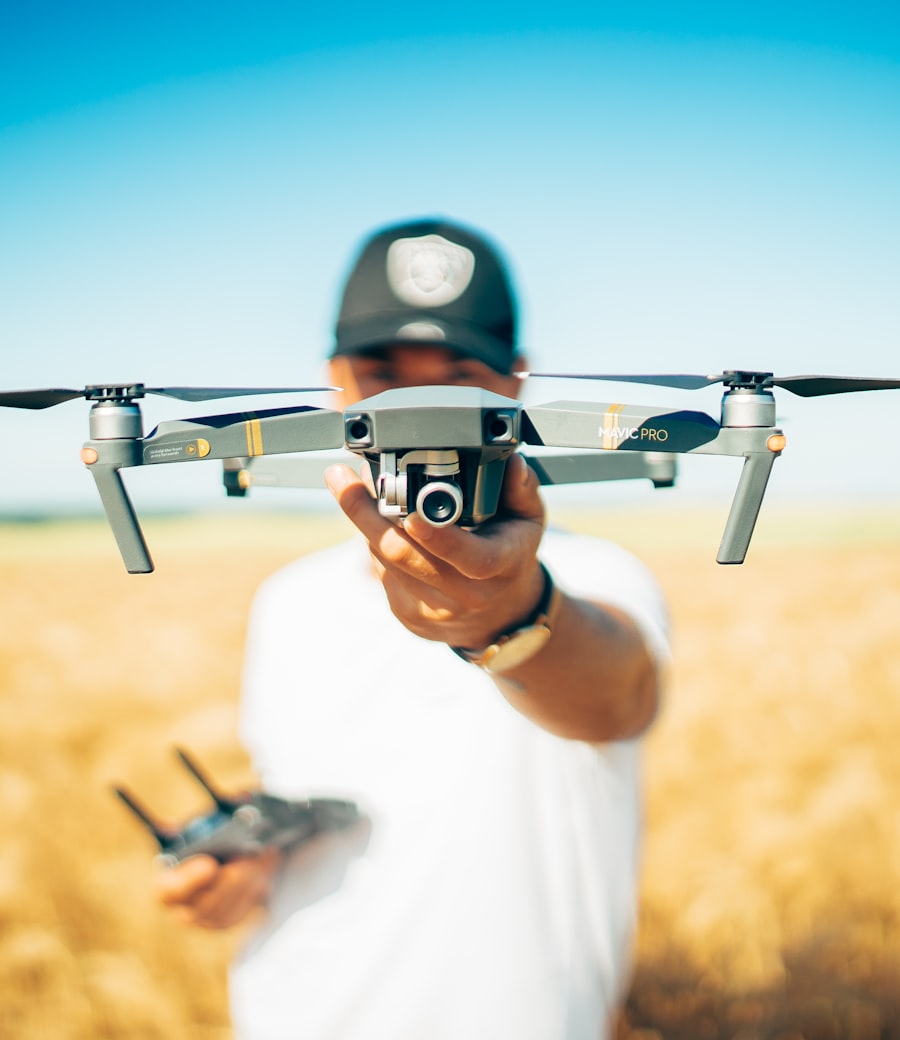
Safety-first by design
Airspace, weather & failsafe literacy
Ground school
Everything that happens before the props spin.
Six structured modules build the knowledge a responsible remote pilot needs — long before take-off. Theory is delivered alongside simulator drills so concepts stick.
Airspace & regulation
Drone categories, no-fly and restricted zones, the Digital Sky framework and the rules that govern where and when you may operate.
Aerodynamics & systems
How a multirotor stays in the air, the role of each onboard subsystem, and how propulsion, sensing and control work together.
Ground control & telemetry
Reading the GCS, interpreting live telemetry, GPS lock, battery and link health before and during every flight.
Weather & site assessment
Wind limits, visibility, interference sources and how to survey and clear a site before take-off.
Manual & assisted flight
Stick discipline in stabilise, altitude-hold and loiter modes — the foundation of precise, repeatable control.
Emergencies & failsafe
Return-to-home, low-battery and link-loss behaviour, and the decision-making for a safe abort or recovery.
Field training
Stick-time that builds real confidence.
Trainees progress through four supervised stages, only advancing once the previous one is solid. The result is a pilot who flies smoothly — and knows exactly what to do when something goes wrong.
Simulator drills
Repeatable muscle-memory practice with zero risk — orientation, hover and recovery before touching a real aircraft.
Tethered & low hover
First powered flights at low altitude under direct instructor supervision, focused on smooth, controlled inputs.
Pattern flying
Box patterns, figure-eights and orientation changes to build true spatial awareness and confident control.
Mission & waypoints
Planning and flying an autonomous waypoint mission while monitoring telemetry and staying ready to intervene.
Learning outcomes
What graduates can do.
On completion of the programme, every trainee will be able to:
Interpret airspace rules and identify where flight is permitted or restricted.
Perform a complete pre-flight inspection and site assessment.
Fly a multirotor confidently in stabilise, altitude-hold and loiter modes.
Read and act on live telemetry — GPS, battery, signal and attitude.
Plan and execute a basic autonomous waypoint mission.
Respond correctly to link-loss, low-battery and other in-flight emergencies.
WHO IT'S FOR
For everyone who needs a steady hand on the sticks.
No previous flight experience is required. Trainees who already fly are streamed into a faster track focused on precision and emergency handling.
Enquire about a cohort →Students & hobbyists
Anyone starting their journey toward responsible recreational or academic flying.
Survey & mapping teams
Professionals who need reliable, repeatable flight for aerial data capture.
Inspection & operations
Field teams adopting drones for infrastructure, agriculture or asset inspection.
Research groups
Labs operating UAV platforms who want a safe, standardised piloting baseline.
Have a problem?
We design, deploy, and scale the
solution.
